
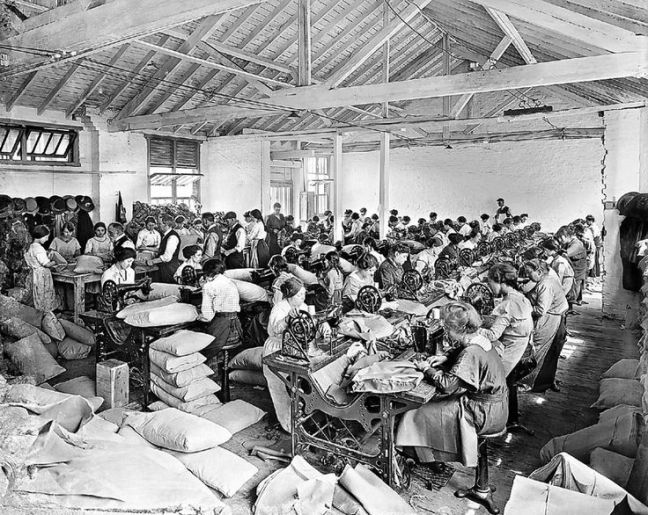
It’s Spring in the northern hemisphere and, for many, that marks the beginning of sewing season (#memademay, for reference). So this week, a salty little sewing tale…
In the 1860s, a small but impassioned debate broke out in both England, France, and the U.S. regarding the potentially “exciting” effects of the sewing machine. That’s right—doctors worried that the rhythmic pumping of the thighs resulted in sexual arousal and that women workers were using the machines to stimulate themselves. Equal parts hilarious and infuriating, it is a story that brings up questions of the industrial use of women’s bodies, their unanswered complaints of fatigue and ailment, masculine control of female sexual processes, and the threat of a working woman enjoying a private pleasure. In short, it’s a juicy one. (Pun most definitely intended.) Continue reading HISTORY PROJECT: The Immoral Rhythms of the Early Sewing Machine

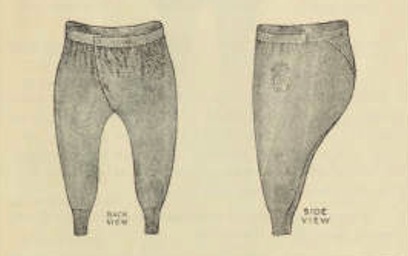
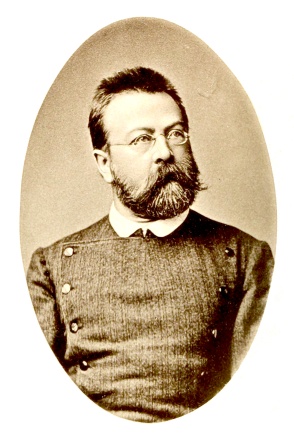 First, the Woolen System. Those of us who are spinners, weavers, knitters, and crocheters are well versed in the wonders of wool. But it was news to me that, more than a century ago, there arose an influential school of thought that wool is not only a practical material but also a supremely healthful one. In 1880, Dr. Gustav Jaeger (sometimes Jäger) published Standardized Apparel For Health Protection on the health benefits of wearing wool, and he followed it up with Health-Culture (<– how great/vague is that title?!) in 1887.
 The Fiber Archive